Who Holds the Vision?
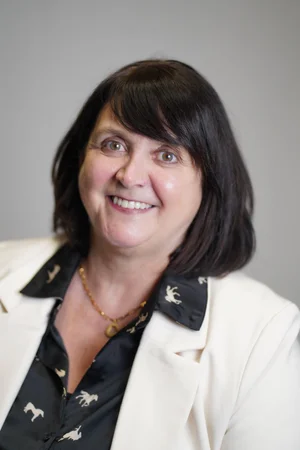
May 2026 | Cyndy Stead, CSTEAD Advisory Inc.
Over the course of my career, I can’t tell you how many times I’ve seen great plans get built only to falter, quietly, without any one person being responsible. Then a couple of years go by, and the organizational plan needs a review. You notice that one project team is moving forward and building momentum, while another is losing steam. A third team is frustrated because they no longer feel seen, and the organization is moving in a direction that made sense once, but hasn’t kept pace with where or how the teams have grown.
Somewhere between the plan and the doing, the vision got lost because the question nobody thinks to ask, until things start to stall, is a simple one – who’s actually seeing the whole picture?
From my own experience, I know the teams were capable, and the organizational mandate was clear, but the strategy was happening in one corner, change management in another, and the day-to-day delivery of a multi-million dollar project was operating in silo. Nobody had a shared view of how those three things connected to each other. The result wasn’t failure, exactly. But it wasn’t what it could have been either. A lot of energy went sideways that could have gone forward.
What I’ve come to understand since then is that this isn’t a people problem. It’s a systems problem. When organizations don’t have a shared way of seeing themselves, their work naturally fragments. People default to their own piece because that’s the piece they can see clearly. Nobody is being territorial or uncooperative. They just don’t have a line of sight to the whole. I’ve also witnessed a pattern, often in community and destination development, where a single strategic plan touches multiple organizations, each with its own mandate, its own board, its own sense of priority. A tourism plan, for example, might connect a destination marketing body, a municipal economic development office, an adventure tourism association, and a local business community. Each of those groups picks up the pieces most relevant to them. In isolation, each piece makes sense. Taken together, without someone holding the whole, the plan drifts. And often the drift isn’t visible until momentum has already slipped.
When I come into a situation like this, my first move is never to ask what’s broken. It’s to map what’s already working. Every organization in the ecosystem is doing something well. The destination body has relationships and market knowledge. The municipality has infrastructure authority and community trust. The business community has ground-level intelligence about what visitors actually experience. Those are real strengths, and they matter.
A strengths-based approach asks a different question than most strategic planning processes do. Instead of “what do we need to fix,” it asks “what do we already have, and how do we connect it?” That shift changes the energy in the room. People stop being defensive about their piece of the plan and start getting curious about each other’s pieces. That curiosity is the foundation of genuine alignment.
But mapping strengths alone isn’t enough. You also need a structure that helps people see how their strengths connect to the shared vision. That’s where the work I do through my Strategic Systems Alignment framework comes in. The SSA framework is built around a simple premise: when people can see the whole system, including how strategy, capacity, daily decisions, and accountability all connect, they stop moving in parallel and start moving together. It turns an abstract plan into something everyone can actually navigate with.
One of the things I’ve learned, sometimes the hard way, is that you can’t align people before you give them a shared language. When a plan goes awry, it’s tempting to look for the accountability gap, but in my experience, that’s rarely where the answer lives. It’s more useful to ask who holds the vision and maintains the line of sight between what others are doing and the bigger picture, and it has to be a person or organization with the relationships, the credibility, and the tools to keep everyone oriented to the shared picture, especially when things get busy and the instinct is to retreat to your own lane.
What I build with clients isn’t just a strategic plan or a governance structure. It’s the communication about connections that lets each part of the system move its own piece forward without losing the thread back to the whole. When it exists, alignment isn’t something you have to enforce. It’s something that happens naturally because everyone can see where they fit.
If that pattern sounds familiar in your organization, I’d love to talk about what holding the vision could look like for your team.